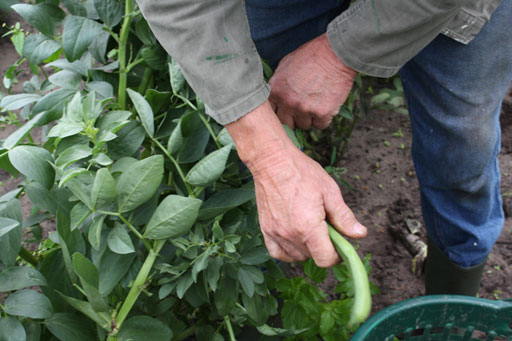


| Crops or shops? As a child, the farmhand’s son liked to stop by here. This noble beech stood close to the sandy path and was part of the modern courtyard, complete with rhododendrons. But he did not come here for the plants or the trees. His moment of joy came when the farmer drove past in his flash car. That was before the war. In a whisper he adds that the farmer never returned. The courtyard has since disappeared. Cars drive along this road all the time now and there are rhododendrons beside all the houses. One of the first small residential estates in Haaren is located to the north of the path. During the war, not even one fifth of the land had been developed. To the north, you had a clear view all the way to Haaren, and to the south, there was only farmland. Oaks still line this road. The small dry trenches are used for drainage during heavy rains and floods. He can still remember the long strips of land behind the houses, where people grew vegetables. But, by the 1960s, the vegetable plots had ceased to be commercially viable. It was far more lucrative to sell the land to property developers and to buy vegetables at the local store. This explains why the houses are numbered A and B. |