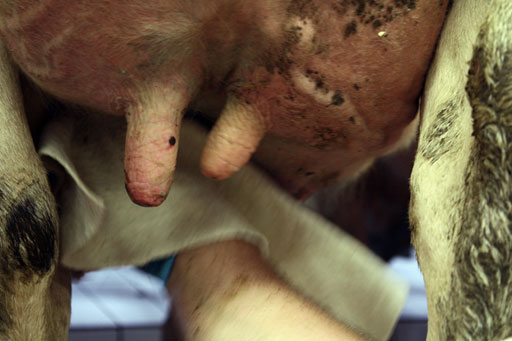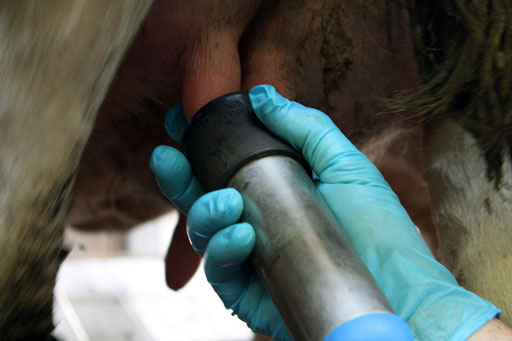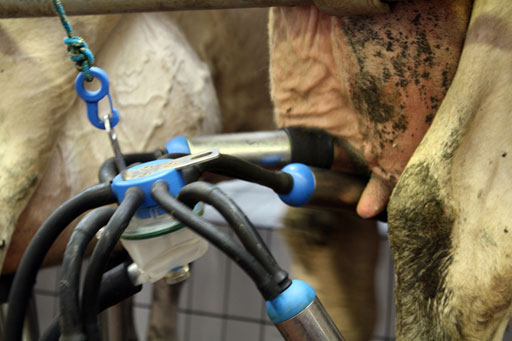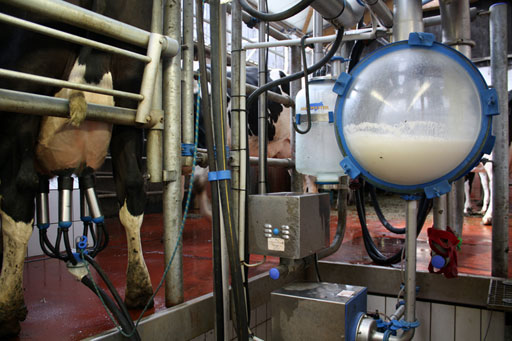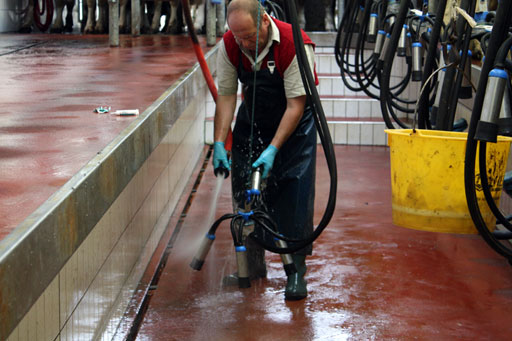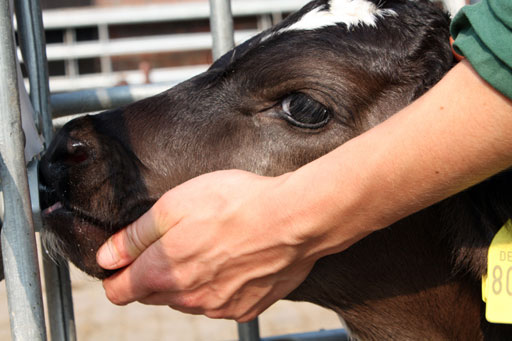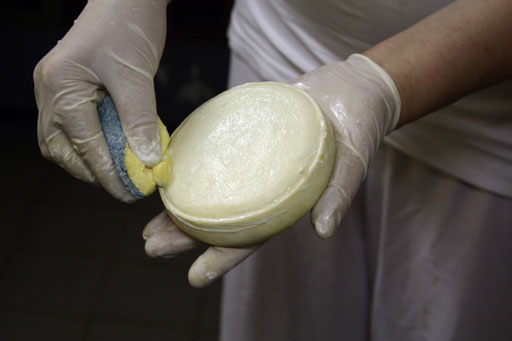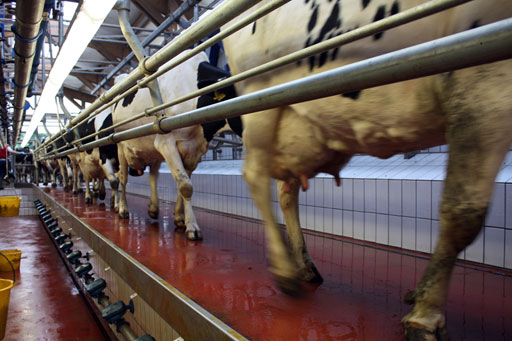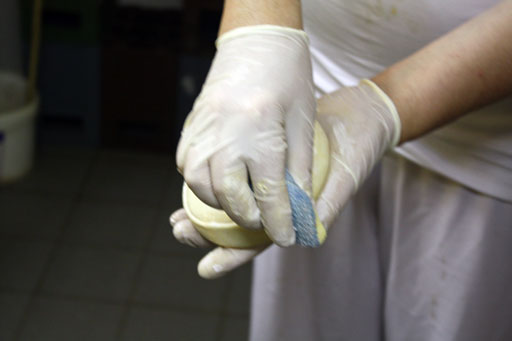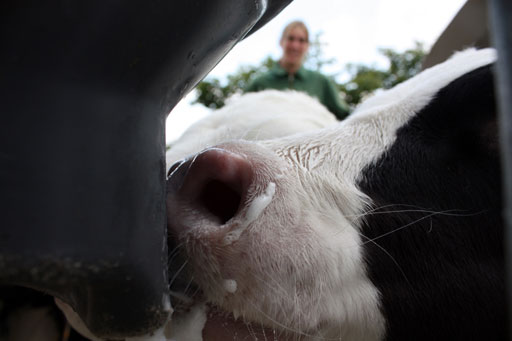
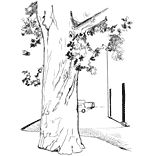


| Churning a profit Until fairly recently a farmhouse stood on this carpark. It was the home of the old farmer and his wife, with hazel and apple trees and two large chestnut trees in the yard. The son talks about this chestnut tree, which stood behind the pig sty. The stench of the thirty pigs in the sty has remained etched in his memory. They also had around thirty head of cattle, which went to pasture from May to October and were milked twice a day. In the summer, the farmer rose at 5 a.m. to place the churns on the path for the milk transport. The orders for cheese and butter were returned in the afternoon with the empty churns. The farm generated a good income and the farmer and his family lived well there until the 1960s. It was never modernised. Land was gradually sold off for development. If history had run differently, there would have been large open stables here and one hundred and fifty cows producing three times as much milk. The land where the houses stand would have been used for hay, grain and maize. The farmers might have produced cheese and curd products from the milk and realised a significantly higher return per litre. |